
From a Single Corn Kernel to Maltodextrin: The Complete Production Journey
Maltodextrin is one of the most widely used functional carbohydrates in the global food industry. It appears in beverages, candies, dairy products, sports nutrition,
bakery foods, seasonings, and many other applications.
But how does a simple corn kernel transform into this versatile ingredient?
This article walks you through the entire journey — from one grain of corn to finished maltodextrin.
1. The Raw Material: Everything Starts with Corn
The primary raw material for producing maltodextrin is corn starch. Corn starch is obtained through wet milling of harvested corn kernels.
Corn is the ideal source because:
It is abundant and stable in supply.
It has high starch content.
It is safe, economical, and suitable for large-scale food processing.
2. Wet Milling: Turning Corn into Starch
To extract starch from corn, manufacturers use a multi-step wet milling process.
Step 1: Steeping
Corn kernels are soaked in warm water with a small amount of sulfur dioxide for 24–48 hours.
This softens the kernels and helps separate different components.
Step 2: Grinding
The soaked corn is ground to release the germ, which is later used to produce corn oil.
Step 3: Separation
Through screening and centrifugation, the corn is separated into:
Starch
Protein (corn gluten)
Fiber
Germ
The resulting starch milk is the base material used to produce maltodextrin.
3. Liquefaction: Breaking Down the Starch
The starch milk is mixed with water and heated.
Then α-amylase enzymes are added to break long-chain starch molecules into shorter chains called dextrins.
A key measure in this process is the DE value (Dextrose Equivalent).
Maltodextrin typically has DE < 20, meaning low sweetness and mild taste.
4. Saccharification: Controlled Enzymatic Conversion
After liquefaction, other enzymes are used to further hydrolyze the starch.
By controlling:
Temperature
pH
Time
Enzyme activity
manufacturers can produce maltodextrin with different functionalities, solubility levels, and physical properties.
5. Purification: Ensuring Food-Grade Quality
The hydrolyzed starch solution undergoes purification to remove color, odors, and impurities.
This includes:
Activated carbon decolorization
Fine filtration
Ion-exchange purification
The result is a clean, neutral-tasting syrup suitable for food applications.
6. Spray Drying: Turning Syrup into Powder
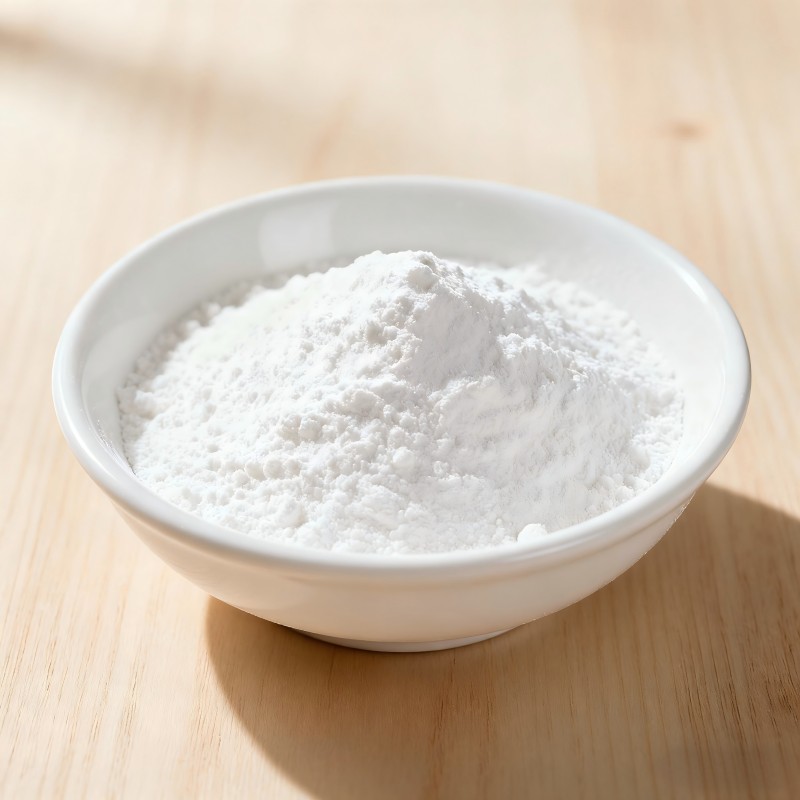
Finally, the purified syrup is dried using a spray dryer, forming fine white or light-yellow powder — the finished maltodextrin.
Spray drying ensures:
Uniform particle size
Good flowability
Easy storage and transport
Stable quality
This is the stage where maltodextrin becomes the versatile powder used in food processing.
7. Key Features of Maltodextrin
Maltodextrin is popular because it offers many benefits:
Neutral taste, does not affect original flavor
Low sweetness
Improves texture, bulk, and mouthfeel
Easily digestible and quickly absorbed
Excellent solubility
Low cost and widely available
8. Where Maltodextrin Is Used
1. Beverages
Improves body, stability, and smoothness.
2. Sports Nutrition
Provides quick, easily absorbed energy.
3. Bakery and Confectionery
Enhances dough structure and product texture.
4. Dairy Products
Acts as a filler and stabilizer.
5. Ice Cream and Frozen Desserts
Reduces crystallization and improves texture.
9. Why Maltodextrin Is Increasingly Popular
Aligns with global trends toward low-sugar, functional foods
Offers fat-replacement capabilities
Improves stability and mouthfeel
Cost-effective and widely produced across major agricultural regions
These advantages have made maltodextrin a staple ingredient for food manufacturers worldwide.
10. Conclusion: Technology Turns Corn into Value
From wet milling to enzymatic hydrolysis and spray drying, each step represents the precision and progress of modern food technology.
Maltodextrin is not just a food additive — it is a bridge linking agriculture, chemistry, and the global food industry.
Awesome! Share to: