
‹
›
‹
›
Sodium Gluconate
1. Overview
Sodium Gluconate is the sodium salt of gluconic acid. It is a white to yellowish, crystalline, free-flowing powder that is highly soluble in water. It is non-corrosive, non-toxic, biodegradable, and readily derived from renewable natural sources (primarily corn), making it an environmentally friendly chelating agent and sequestrant.
2. Key Properties and Functions
Excellent Chelating Agent: It effectively forms stable complexes with di- and trivalent metal ions (such as Ca²⁺, Fe²⁺, Fe³⁺, Al³⁺) over a wide pH range, especially in alkaline conditions where many other chelators are ineffective.
Threshold Effect: It has a unique "threshold effect," meaning a small amount can inhibit the precipitation of scale-forming salts like calcium carbonate and calcium sulfate, preventing the formation of deposits.
Sequestering Power: It binds to metal ions in solution, preventing them from participating in unwanted chemical reactions.
Retarding Effect: In the construction industry, it acts as a set retarder for concrete and plaster, slowing down the hydration process and allowing for more workable time.
High Water Solubility: It has excellent solubility in water, facilitating its use in various aqueous applications.
Biodegradability: It breaks down easily in the environment, making it a preferred choice in "green" formulations.
3. Main Applications
Construction Industry:
Set Retarder: Added to concrete and cement mixes to delay the setting time, which is crucial for large pours, hot weather concreting, and long-distance transportation.
Water Reducer: Improves the workability of concrete without adding extra water, leading to higher strength and durability.
Industrial Cleaning:
Used in alkaline cleaning formulations for metals, glass, and ceramics. It removes rust and scale (e.g., from boilers, heat exchangers, dairy equipment) without being corrosive to the base metal.
A key component in bottle washing detergents.
Water Treatment:
Acts as a scale and corrosion inhibitor in cooling water systems, boilers, and desalination plants.
Food Industry (as a Food Additive E576):
Sequesterant: Binds trace metals that can catalyze oxidation, thus preventing discoloration and rancidity, which helps to improve the shelf-life of food products.
Stabilizer and Emulsifier: Used in dairy products, processed meats, and baked goods.
Personal Care and Cosmetics:
Used as a chelating agent in shampoos, soaps, and creams to enhance the stability of the formulation by inactivating metal ions that could cause spoilage or rancidity.
Agriculture:
Used in micronutrient fertilizers and as a chelating agent for foliar sprays to improve plant nutrient uptake.
Pharmaceuticals:
Used as an excipient and a chelating agent in certain medicinal preparations.
4. Packaging and Storage
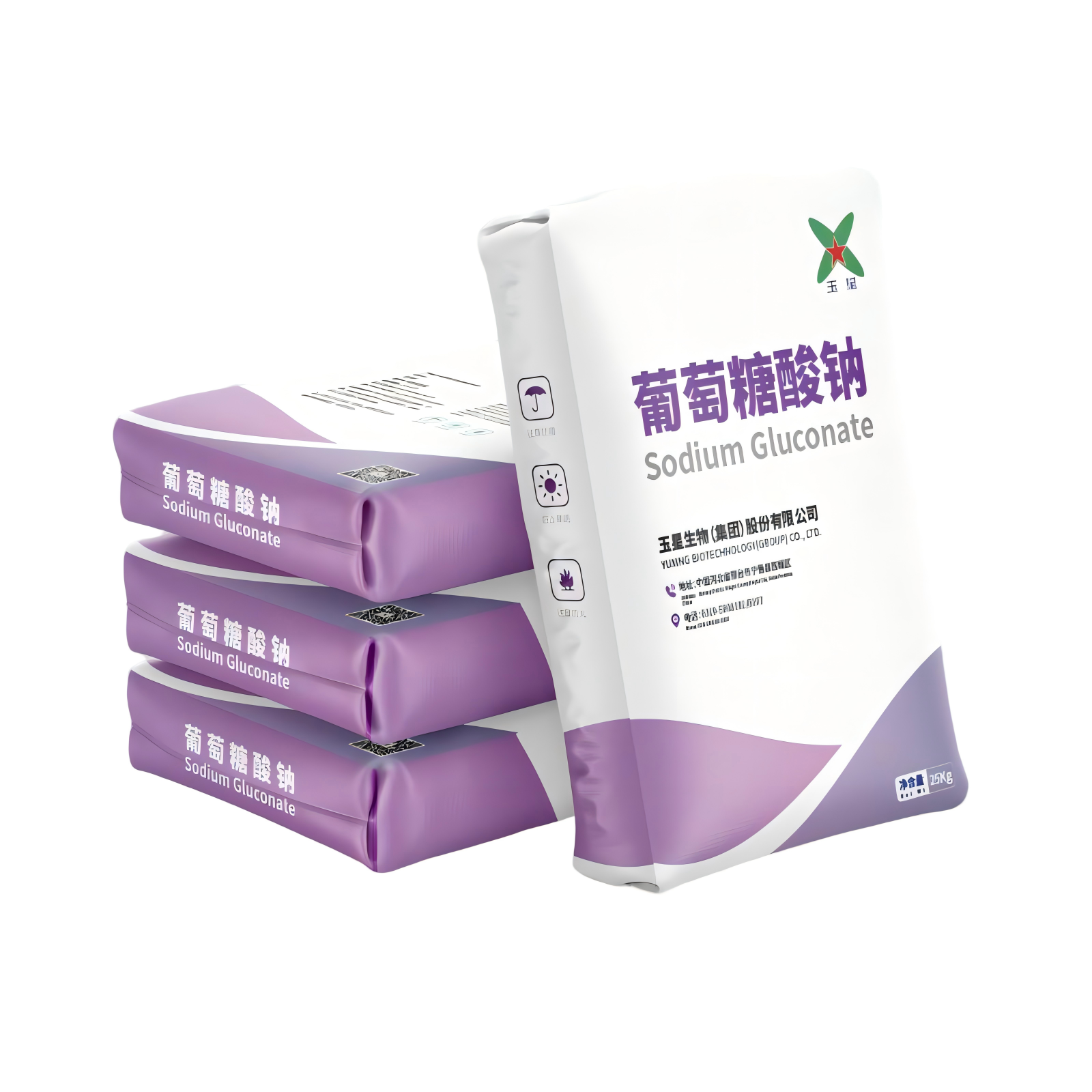
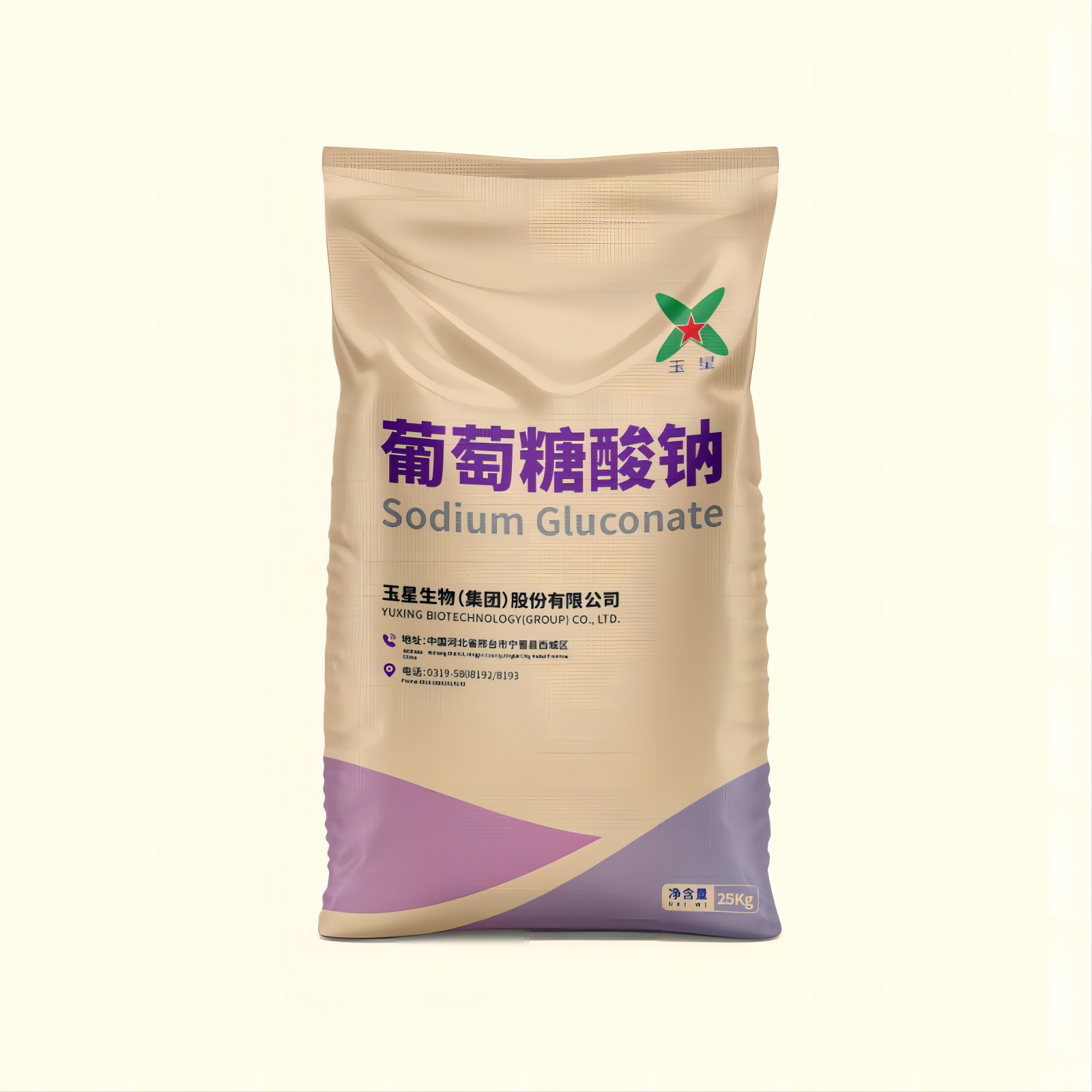
It is typically available in 25 kg bags (multi-wall paper or plastic) or larger bulk containers.
It should be stored in a cool, dry, and well-ventilated place, away from moisture.
Summary in a Nutshell:
Sodium Gluconate is a versatile, safe, and biodegradable organic salt renowned for its powerful ability to chelate metal ions, particularly under alkaline conditions. Its primary uses span from being a crucial retarder in concrete to an effective cleaner, a food preservative, and a water treatment chemical.
Get a Free Quote